

An employee’s pension contribution may appear as a simple line of items on a payroll report. The percentage is calculated. A deduction is made. An employer contribution is added. Payment is submitted.
But behind that calculation is a much bigger responsibility.
Employers need to know who is eligible, what amount was contributed, when payments were made, what deductions were applied, and whether the supporting records can explain every transaction later.
For businesses operating in the Cayman Islands, pension administration is not only about making payments. It is also about maintaining accurate employment and payroll information that can support compliance reviews, employee questions, and internal record checks.
A company may have hundreds of payroll transactions every year. Without organized records, answering a simple question such as: “Was this employee’s pension contribution correctly calculated and paid?”
This is where maintaining accurate Cayman pension records becomes important.
When employee information, payroll details, documents, and contribution history are kept connected, HR teams can understand not only what happened today but also what happened throughout the employee’s journey.
Pension Is More Than a Payroll Calculation
The Cayman Islands pension system requires employers and employees to participate in an approved pension arrangement when applicable.
Many employers think about pension mainly at the payroll stage:
Employee salary → contribution percentage → payroll deduction → pension payment.
But the actual process starts earlier. Before a contribution is calculated, the employer needs accurate employee information.
- Is the employee eligible?
- When did employment begin?
- What earnings are included?
- What employee deduction applies?
- What employer contribution is required?
- Have there been changes in employment status?
Each of these details affects the accuracy of the pension record.
This is why Cayman Islands pension administration depends on more than a monthly payment. It depends on maintaining a reliable employment record behind that payment.
The Cayman Islands Department of Labor & Pensions provides guidance on employer responsibilities, including maintaining employment records and supporting documentation.
Employers should refer to official DLP guidance for employee pension for current requirements: https://gov.ky/web/dlp/pensions-investigation-unit
What Are Cayman Pension Records?
Cayman pension records are the documents, and information employers maintain to show how pension responsibilities have been managed for employees. These records help demonstrate:
- Which employees were included in the pension arrangement
- Employee employment dates
- Salary and payroll information
- Employee deductions
- Employer pension contributions
- Payment dates
- Supporting pension documentation
- Changes affecting pension eligibility or contributions
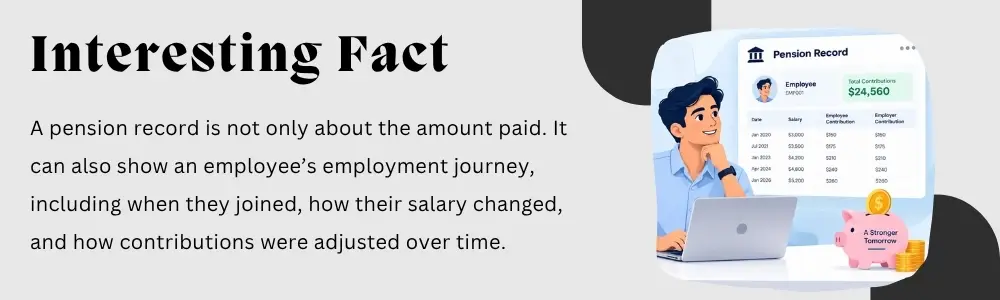
A pension record should tell a complete story. For example:
- An employee joins the company in January.
- Their salary changes in July.
- Their contribution amount changes.
- They transfer departments in September.
- They leave employment the following year.
A complete record should allow HR to follow each change through audit trail and understand how pension-related calculations were affected. Without that history, businesses may have only isolated numbers instead of a complete employment record.
Employee Eligibility Information Should Be Maintained
Before discussing contributions, employers need accurate employee information. Pension administration starts with knowing which employees are covered and when their pension obligations begin. Important employee details may include:
- Employee name and identification details
- Employment start date
- Employment status
- Salary information
- Relevant employment changes
- Pension enrollment information
This information often exists across multiple HR processes. A new employee joins through onboarding.
Payroll creates salary records.
HR maintains employment details.
The pension provider receives enrollment information. When these records are managed separately, small differences can create larger problems.
For example: The employee’s start date in HR records does not match the payroll start date. The salary used for payroll does not match the salary recorded for pension calculations.
A contribution change is processed but not documented. Connected employee records help HR maintain consistency between different areas of employment administration.
Employer Pension Contributions Need Clear Records
One of the most important parts of Cayman pension records is documenting employer and employee contributions. Employers need visibility into:
- Contribution amounts
- Employee deductions
- Employer contributions
- Contribution periods
- Payment dates
- Supporting payroll information
Employer pension contributions should not exist only as a final total. A business should be able to understand how the contribution amount was calculated. For example:
An employee receives a salary adjustment or revision.
The payroll amount changes.
The pension contribution changes.
The record should show when the adjustment happened and why the contribution changed.
This becomes especially important when employees ask questions about their pension history. A clear record allows HR to provide an explanation instead of searching through old payroll files or emails.
Payroll Slips Are Part of the Pension Record Trail
Payroll slips are often viewed as payment documents, but they also support pension recordkeeping. A payroll slip can help show:
- Employee earnings
- Pension deductions
- Other payroll adjustments
- Payment periods
For businesses, maintaining accurate payroll documentation supports stronger payroll record keeping.
Imagine an employee asks: “Why was my pension deduction different in July compared with June?”
HR needs more than the current payroll report. They need historical payroll information that explains the change.
- Was there a salary revision?
- Did the working hours change?
- Was there an adjustment?
- Was the contribution updated because of a new employment arrangement?
Good payroll records help answer these questions.
Employment Changes Can Affect Pension Information
Employees do not remain static throughout their employment. They may:
- Receive salary changes
- Change departments
- Change working arrangements
- Move between employment categories
- Leave the company
Each change creates a possible impact on pension administration. For example, a salary increase may affect contribution calculations. A termination requires accurate employment and end information. A change in employee details may require updates with relevant parties.
This is why Cayman pension records should reflect changes throughout the employee lifecycle rather than only showing the latest information. The current record tells HR where the employee is today. A historical record explains how they arrived there. Both are important.
How Long Should Employers Keep Pension Records?
Record retention is an important part of compliance. The Cayman Islands Department of Labour & Pensions states that employers should retain employment records for five years.
These records include information such as employment dates, payroll records, deductions, employer contributions, and payment details. Maintaining records for the required period allows employers to respond to reviews, employee questions, and compliance requirements with supporting evidence.
Five years can feel like a long time.
But employment questions often appear after months or years.
An employee may ask about a previous contribution.
A company may need to review historical payroll information.
A compliance review may require evidence of previous payments.
Without proper payroll record keeping, finding accurate information can become unnecessarily difficult.
Why Centralized Employee Records Matter for Pension Administration?
Pension responsibilities touch multiple HR areas. Employee Information provides the details needed to identify the employee and maintain a connected employment history.
- Payroll provides earnings and deductions.
- Documents provide supporting evidence.
- Reports help HR review information across employees.
- Audit records help track changes.
When these areas operate separately, HR teams may spend unnecessary time comparing different sources. For example:
A payroll report shows one salary.
An employee document shows another.
A pension record reflects a different contribution amount.
The issue is not always the calculation itself. Sometimes the challenge is proving how the calculation was reached. A centralized employee record approach helps businesses maintain a clearer connection between employee information and payroll activities.
Role of Pension Payroll Software
As businesses grow, managing pension calculations manually becomes more difficult.
- Multiple employees.
- Different salaries.
- Monthly payroll cycles.
- Changes throughout employment.
- Historical records.
This is where pension payroll software can support HR teams by helping organize payroll-related pension information and reducing manual tracking. The purpose is not to remove HR responsibility.
Instead, technology can help HR maintain accurate records, identify missing information, and keep payroll processes more consistent. The best systems support the people managing compliance rather than replacing their judgment.
Common Mistakes Employers Should Avoid
Keeping Only the Final Contribution Amount A total does not explain how the amount was calculated. Employers should maintain the supporting payroll and employee information behind the number.
Updating Payroll but Not Employee Records
A salary change processed in payroll should also be reflected in relevant employee records.
Storing Pension Information Separately
When pension documents, payroll data, and employee details are stored in different locations, finding information later becomes harder.
Ignoring Employment Changes
Transfers, salary revisions, and employment status changes can affect pension-related records.
Waiting Until a Review Happens
Recordkeeping should happen throughout employment, not only when someone requests information.
Frequently Asked Questions
What pension records should Cayman employers keep?
Employers should maintain records that support pension administration, including employee details, employment dates, payroll information, employee deductions, employer contributions, and payment records.
How long should employers keep pension records in Cayman?
The Cayman Islands Department of Labor & Pensions requires employers to retain employment records for five years, including relevant payroll and contribution information.
What information should be included in employer pension contributions records?
Records should show contribution amounts, payment periods, employee deductions, employer contributions, and supporting payroll information.
Why is payroll record keeping important for pension compliance?
Accurate payroll record keeping helps employers explain how contributions were calculated and provides evidence if questions or reviews occur.
Can HR software help manage pension records?
Yes. HR systems can help connect employee information, payroll records, documents, reports, and audit history, so businesses can maintain clearer employment records.
What happens if pension records are incomplete?
Incomplete records can make it difficult for employers to explain contribution calculations, respond to employee questions, or provide supporting information during reviews.
Keep Pension Records Ready Before You Need Them
The pension administration is not only about making the correct payment every month. It is about maintaining the information that explains every payment.
For Cayman employers, accurate Cayman pension records create confidence that employee contributions, employer responsibilities, payroll information, and employment history can be clearly understood when needed.
HR HUB PRO helps businesses connect Employee Information, Payroll & Compliance, Documents, Reports, and Audit Logs in one organized HR environment.