

Recruiting in the Cayman Islands changed in 2026, and for employers hiring roles connected to work permit applications, one of the most noticeable changes happens before the application is even submitted.
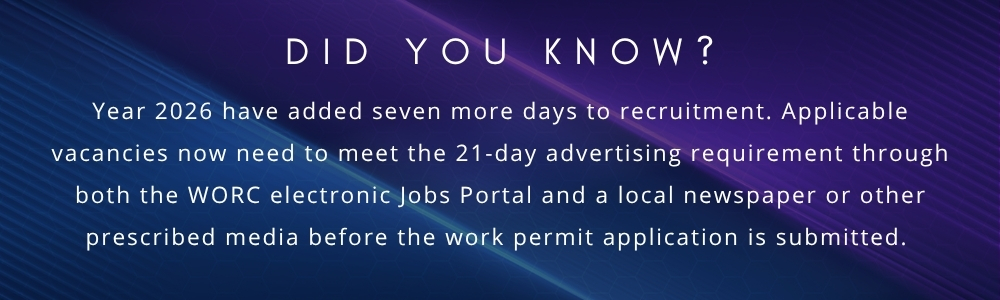
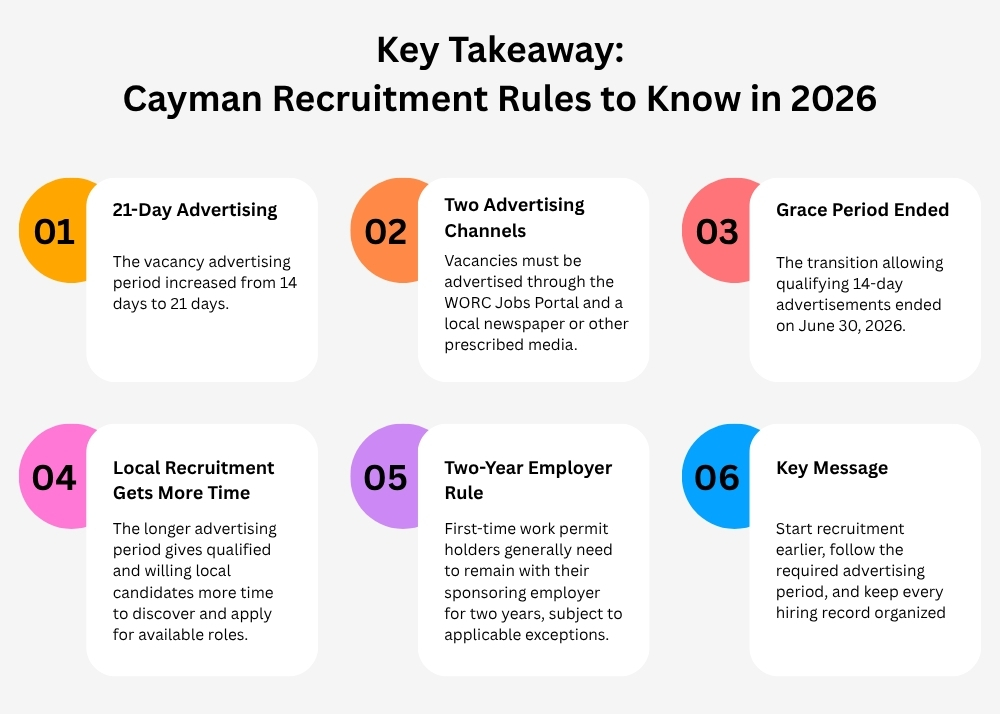
The vacancy advertising period has moved from 14 days to 21 days, and the advertising channels have changed too.
At first glance, another seven days may not sound significant. For HR and recruitment teams, though, it affects when a vacancy should be opened, how local candidates are considered, when recruitment feedback is documented, and when the work permit process can move forward.
This makes recruitment compliance software particularly relevant for Cayman employers. Recruitment is no longer only about finding a suitable candidate quickly through HR software. For applicable work permit hiring, businesses also need to maintain a clear record of how the vacancy was advertised and how the recruitment process progressed.
So, what does Cayman’s 21-day rule mean for employers, candidates, and recruitment planning?
From 14 Days to 21 Days: What Changed?
Before the 2026 changes, the applicable vacancy generally needed to be advertised for 14 days on the WORC Jobs Portal before a work permit application.
The new framework extends that period.
Under the amended legislation, employers seeking a work permit grant or renewal must advertise the relevant vacancy for 21 days before submitting the application through:
- The WORC electronic Jobs Portal
- A local newspaper or other prescribed media
The legislation came into force on May 1, 2026. The government later provided a transitional grace period under which permit applications submitted up to June 30, 2026 could still rely on advertisements meeting the previous 14-day requirement. After June 30, applications must meet the new 21-day requirement.
For more information read: Cayman Islands Government Immigration Reform Guidebook
Why Did Cayman Government Move to 21 Days?
The advertising requirement is part of the labor-market testing that occurs before an employer proceeds with an applicable work permit application.
The amended Act specifies that advertising is intended to establish whether suitably qualified and willing candidates are available, with priority given in the prescribed order to Caymanians, certain Residency and Employment Rights Certificate holders, and people legally and ordinarily resident in the Islands.
Giving a vacancy 21 days rather than 14 provides a longer period for eligible local candidates to see the opportunity and apply. For employers, the benefit is not simply “waiting seven more days.” A longer and more documented recruitment window can give the business more time to:
- Receive local applications
- Review candidate qualifications
- Compare applicants against the job requirements
- Record recruitment outcomes
- Prepare the required recruitment feedback
- Keep supporting recruitment records together
- Plan a work permit application only after the required advertising stage
This is where Cayman job advertising requirements become part of recruitment planning rather than an administrative step completed at the end.
What Does the 21-Day Rule Mean for Cayman Employers?
Imagine a hotel expects to need an experienced specialist in six weeks. Previously, its recruitment calendar may have been designed around the 14-day advertising period. If HR continues using that old timeline, it can lose a week before the work permit application stage even begins. That can matter when a business is recruiting ahead of:
- Tourism peaks
- Hotel openings
- New contracts
- Seasonal demand
- Expansion into another location
- Specialist projects
- Planned employee departures
The answer is not to rush recruitment, it is to start earlier. Recruitment compliance software can help HR create the vacancy, maintain candidate profiles, record recruitment activity, and keep the supporting information connected while the required advertising period runs.
The 21 Days Should Be Active Recruitment Time
There is an important difference between: “The vacancy has been online for 21 days.”
And “We conducted a documented recruitment process during those 21 days.”
The second is the better mindset. A recruitment tracking software process can help HR follow what happens after the advertisement is published.
For example:
Vacancy advertising begins
During the advertising period: Applications are received and candidate profiles are created.
Recruitment stage: Candidates are reviewed against the stated job requirements.
Before the permit application: Recruitment outcomes and supporting information are checked.
The 21-day period can therefore become useful recruiting time rather than a countdown HR simply waits to finish.
What Should HR Track During the Advertising Period?
Now the role of hiring compliance software becomes clearer. A recruitment team may be managing several vacancies at once, each at a different stage.
- One vacancy may have started advertising yesterday.
- Another may be approaching the end of its 21-day period.
- A third may already have several Caymanian applicants requiring review.
- A fourth may be ready for recruitment feedback.
Without a structured process, HR may depend on calendars, spreadsheets, emails, CV folders, and individual reminders. Instead, the recruitment record should make important information easier to follow.
Job Requisition: HR should know why the position is being recruited, which department requested it, and who approved the opening.
Vacancy Information: The job title, description, required experience, salary information, working hours, and other applicable details should remain consistent across the recruitment process.
Advertising Dates: The start and end of the applicable advertising period should be clearly recorded.
Candidate Profiles: Applications and candidate information should remain connected to the correct vacancy.
Recruitment Activity: HR should be able to see where applicants are in the hiring process.
Supporting Documents: Relevant recruitment records should not be scattered across personal inboxes and shared folders.
This is what makes candidate management software useful beyond storing CVs.
The Job Advertisement Itself Matters
The government's current guidance also specifies information that should appear in the local newspaper advertisement. The Immigration Reform Guidebook identifies items including:
- WORC electronic Jobs Portal ID
- Job title and description
- Required skills and experience
- Base salary or salary range with benefits
- Work hours per month
- Employer contact information
The Guidebook also states that employers advertising in a local newspaper need proof of three consecutive weeks of advertising, with at least one advertisement per week.
This means work permit job advertising is not simply about remembering the 21-day duration. HR also needs to pay attention to where the vacancy was advertised, what information appeared in it, and what supporting evidence should be retained.
What Does the Two-Year Employer Rule Mean for Recruitment?
The advertising requirement is not the only 2026 change employers should understand when recruiting international employees.
Government guidance states that first-time work permit holders granted a work permit on or after May 1, 2026 must generally remain with the sponsoring employer for at least two years. If the employee leaves before completing those two years, the legislation provides for a one-year period outside the Cayman Islands before another prospective employer can apply for a work permit for that person, subject to specified exceptions. Domestic helpers changing employer within the same occupation are treated differently, and other exemptions may apply in defined circumstances.
- This makes the recruitment decision more consequential for both sides.
- The employer should have a clear understanding of the role it is filling.
- The candidate should have a clear understanding of the position being accepted.
Job responsibilities, salary, expectations, working arrangements, and employment terms should not become clear only after the person joins. This gives hiring compliance software another purpose: keeping approved job information, candidate records, and recruitment documentation connected from the beginning.
Does the Two-Year Rule Benefit Employers?
There can be an obvious workforce-planning benefit. If a first-time permit holder generally remains with the sponsoring employer for the required period, businesses may experience more stability in roles that are difficult or expensive to recruit internationally.
Fragomen notes that employers may benefit from increased retention, while also warning that the restriction could make recruiting some foreign talent more difficult and require businesses to plan workforce needs more carefully.
That second point matters.
The two-year rule should not be viewed simply as an employee-retention mechanism. It increases the importance of making a good hiring decision in the first place. A poor match can be difficult for the employee and disruptive for the employer.
Better job definitions, careful screening, realistic expectations, and documented hiring decisions therefore become even more useful.
Does the 21-Day Rule Benefit Cayman Employees and Job Seekers?
For Caymanian and other eligible local candidates, the clearest potential benefit is more time and visibility.
A 21-day window provides seven more days than the previous requirement for candidates to discover a vacancy, prepare an application, and enter the recruitment process. Advertising through the WORC portal and the prescribed local newspaper channel also broadens the required visibility of the vacancy compared with the previous portal-only rule described in the 2026 reform material.
For businesses, this can also be useful. A qualified local candidate may be available without the employer needing to continue into an international work permit process.
Local recruitment can potentially mean a faster start, fewer immigration-related steps, and a candidate who already understands the Cayman immigration employment environment.
(Have to link the immigration blog posted on 1st September of HR HUB PRO)
The 21-day rule therefore should not automatically be viewed as seven days of recruitment delay. Used properly, it is seven additional days of labor-market testing.
Where Recruitment Software Helps
Recruitment compliance software should not decide whether a candidate satisfies immigration requirements, and it does not replace WORC or professional immigration advice. Its role is to organize the employer's recruitment process.
- Recruitment: Create and manage vacancies from one structured process.
- Candidate Profiles: Keep applicant details and recruitment history connected to the vacancy.
- Job Requisitions: Record the internal request and approvals behind the position.
- Workflow and Escalation: Route vacancies and recruitment actions to the appropriate people and flag pending steps.
- Employee Information: Carry the selected candidate into the employee process without unnecessarily rebuilding their information.
- Document Management: Maintain appropriate recruitment records and supporting documents.
- Reports and Analytics: Review vacancy status, candidate progress, recruitment activity, and other hiring information.
When these areas work together, recruitment tracking software becomes more than an applicant list. It becomes the record of how the vacancy moved from business need to recruitment decision.
So, What Does Cayman's 21-Day Rule Really Change?
It changes more than the number printed on a recruitment calendar.
The move from 14 to 21 days gives eligible local candidates a longer opportunity to see and respond to applicable vacancies. It requires employers to account for additional advertising time before relevant work permit applications. It also increases the value of maintaining consistent vacancy information, candidate records, recruitment records, and supporting documentation. At the same time, the two-year employer restriction affecting first-time work permit holders makes the quality of the original recruitment decision even more important.
That is why the answer to this blog's title is not simply: “Advertise for 21 days.”
The bigger lesson is: Start earlier, recruit carefully, document the process, and know exactly where every vacancy stands.
That is where recruitment tracking software and hiring compliance software can support Cayman employers without attempting to replace the official WORC process.
Turn 21 Days Into a Better-Managed Recruitment Process
Seven additional advertising days do not need to become seven days of uncertainty. They can become time to find local talent, screen candidates properly, maintain clearer recruitment records, and prepare the next hiring step.
HR HUB PRO connects Recruitment, Candidate Profiles, Job Requisitions, Workflow & Escalation, Employee Information, Document Management, and Reports & Analytics to help Cayman businesses maintain a clearer recruitment process from vacancy request to employee onboarding.
Create the position. Track the advertising period. Keep candidate information together. Record recruitment progress. Maintain supporting documents. Know what needs attention next.
Because when Cayman recruitment has more rules and more steps to follow, recruitment compliance software should help HR spend less time reconstructing what happened and more time managing what happens next.