
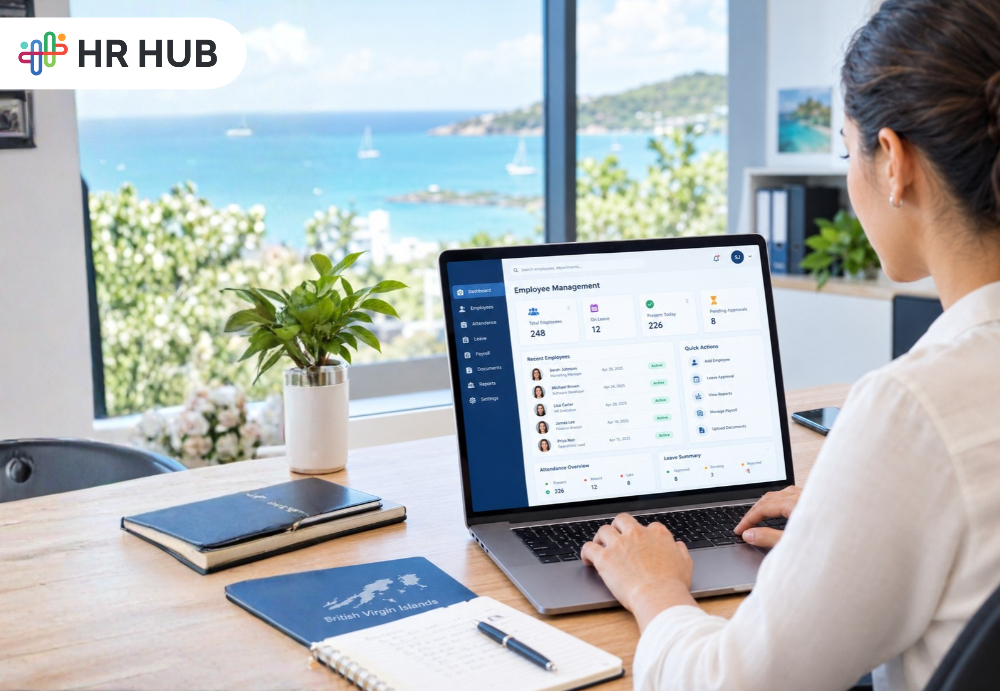
A business can operate across a few offices, a hotel, several client locations, and remote working arrangements without having a particularly large workforce. Yet keeping track of its people can become complicated surprisingly quickly.
In the British Virgin Islands (BVI), businesses across tourism, financial services, professional services, and other sectors may need to coordinate employees working in different locations, manage international employees, maintain employment documents, and keep attendance and payroll information accurate. When these details are spread across spreadsheets, email conversations, paper files, and separate systems, HR can spend more time finding information than using it.
This is where employee management software becomes useful. It gives HR teams a more organized way to maintain employee information, manage workforce records, coordinate routine HR processes, and understand what is happening across the business.
The goal is not simply to move paperwork online. It is to make employee information easier to maintain, access appropriately, and use when decisions need to be made.
Workforce Management Looks Different Across Island Businesses
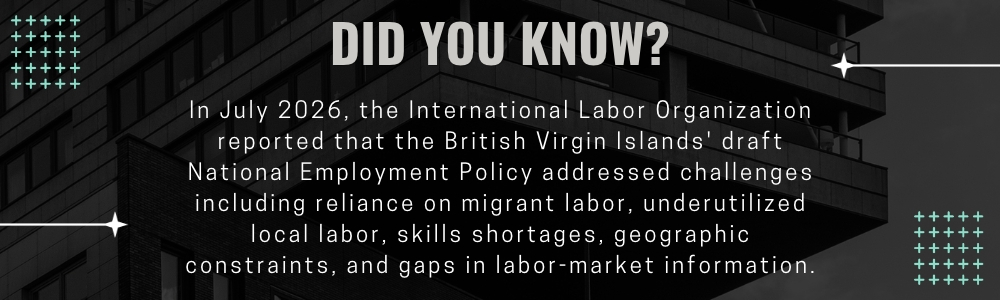
Managing employees across different locations is not quite the same as managing a team that works together in one office every day.
A tourism business might have employees working in guest services, housekeeping, maintenance, administration, and management. A professional services firm may have employees working at its office, visiting clients, or operating remotely. Another organization may have several departments with different working schedules and reporting arrangements.
Even when everyone belongs to the same company, their daily working arrangements can be very different.
For HR, that creates several practical questions. Are employee contact details current? Who is working at each location? Where are employment documents stored? Have relevant employee changes been recorded? Can authorized managers access the information they need without repeatedly asking HR?
A well-organized approach to workforce management software for Caribbean businesses should help answer these questions without creating another layer of administrative work.
The challenge is not necessarily the number of employees. It is the number of places where employee information lives and the number of people who need to use it.
Why Employee Information Becomes Difficult to Manage
Most HR teams do not deliberately create complicated recordkeeping processes. They usually develop gradually as the business grows.
An employee joins, and HR creates a spreadsheet entry. Their signed contract is saved in a folder. Attendance is recorded in another system. Payroll maintains salary information separately. Later, the employee changes departments or updates their contact details, and each relevant record needs attention.
When these updates are not coordinated, different records can start telling different stories.
For example, an employee's current department may have been updated in the HR spreadsheet, but an older document still lists the previous department. A manager may have changed, but the attendance approval process still follows the old reporting relationship. A contract may be available in an email attachment, but HR cannot immediately locate the latest version.
This is where employee records software can help by organizing relevant information around the employee rather than leaving it scattered across disconnected files. A central employee record can include information such as:
- Personal and contact details
- Employment dates and job information
- Department, designation, and reporting manager
- Employment contracts and supporting documents
- Relevant attendance and leave information
- Payroll-related employee details
- Changes to employment information over time
The precise information maintained will depend on the business and its requirements. The important principle is that authorized users should be able to find current information without repeatedly collecting the same details from different departments.
An employee management system in the Caribbean can also help establish more consistent processes for recording changes. When an employee moves to another department, for example, HR can follow a defined update process instead of relying on separate messages to several colleagues.
Centralization does not mean every manager should see every employee's record. Sensitive information should remain protected through appropriate access permissions, with users able to view or change only the information relevant to their responsibilities.
What Caribbean Businesses Need from Employee Management Systems
A business operating in the Caribbean may have to coordinate different employee groups, locations, working arrangements, and local requirements. The system supporting its HR processes should therefore be useful in daily operations, not simply provide a place to store names.
An effective employee management system in the Caribbean should support a few essential areas.
1. A Reliable Employee Record
HR needs a dependable source for employee details, job information, employment history, and relevant supporting records. When the information changes, the business should have a clear process for updating it.
2. Organized Employee Documents
Contracts, identification records, certificates, and other employment documents should be easy for authorized users to locate. Where documents have expiry dates or need renewal, HR should have a process for monitoring them.
This is one of the practical uses of employee records software: keeping documents connected to the right employee instead of relying on individual inboxes or loosely organized folders.
3. Attendance and Workforce Visibility
Attendance information helps HR and managers understand whether employees have recorded their working time as expected. For businesses with different locations or work schedules, visibility into attendance can help identify records that need to be checked.
4. Connected Payroll Information
Employee details, salary information, attendance, leave, and other payroll inputs often influence the payroll process. When those details are maintained in disconnected systems, HR and payroll teams may need to reconcile information manually.
Workforce management software for Caribbean businesses can help reduce this fragmentation when relevant employee and attendance information is connected to payroll processes.
5. Useful Reports
HR should be able to answer practical questions about headcount, employee status, attendance, documents, and workforce changes without manually combining multiple spreadsheets every time a report is needed.
The aim is to give HR a clearer view of the workforce while keeping the underlying information accurate and appropriately protected.
What British Virgin Islands Employee Management Software Helps HR Teams Do
For businesses in the British Virgin Islands, the value of employee management software becomes clearer when it is considered through everyday HR tasks rather than a list of technical features.
Keep Employee Information Current
When an employee joins, changes roles, receives a promotion, or moves to another location, their information may need to be updated in several areas.
A structured process helps HR record the change and identify any related updates that may be required. It also reduces the risk of different teams relying on outdated information.
Make Documents Easier to Find
Employee documents are often needed at different points during employment. HR may need a contract for a review, an employment document for an administrative process, or a certificate to confirm that a record is current.
An organized employee records software setup helps keep these documents associated with the right employee, making retrieval easier when an authorized user needs them.
Improve Attendance Visibility
When employees work across departments, shifts, or locations, attendance information can become harder to monitor manually.
A connected process helps HR review attendance records and identify missing entries or discrepancies that need attention. It also gives managers a more consistent view of the information relevant to their teams.
Attendance records can contribute to payroll preparation, but they should still be reviewed according to the company's policies and applicable requirements.
Keep Payroll Inputs Consistent
Payroll accuracy depends on more than calculations. The employee information used to prepare payroll must also be current.
A salary change, new employee, termination, or adjustment to relevant payroll inputs needs to reach the appropriate process at the right time.
An employee management system in the Caribbean can help reduce duplicated data entry when employee information and payroll processes are connected. However, the business still needs to configure its payroll settings according to the rules that apply in each jurisdiction.
Give HR a Better View of the Workforce
When employee information, attendance, and documents are easier to access, HR can spend less time collecting basic details and more time reviewing workforce needs.
For example, HR may need to check how many employees are active, which documents require follow-up, or whether a department's records have been updated following organizational changes.
Workforce management software for Caribbean businesses can support this kind of visibility when reporting draws on consistent information across relevant HR processes.
What If Your Business Operates in Both the British Virgin Islands and Cayman Islands?
Some businesses manage employees in more than one Caribbean jurisdiction. In these cases, centralizing employee information can be useful, but the organization must not assume that every local requirement is identical.
The British Virgin Islands and Cayman Islands have their own employment, payroll, and administrative requirements. A company operating in both locations should maintain clear employee and employment information for each jurisdiction and configure relevant payroll and compliance processes accordingly.
For a company operating in both territories, employee management software should help maintain a consistent employee-information process without blending separate local requirements into one generic setup.
That means HR can use a common approach to employee records and document management while retaining the jurisdiction-specific information needed for payroll, statutory contributions, work permits, and other applicable processes. The objective is consistency where it makes sense and local accuracy where it matters.
Building HR Processes That Scale With Business Growth
A process that works for ten employees may become difficult to maintain when the business grows to fifty or several hundred. More employees usually mean more documents, more changes, more reporting relationships, and more requests for information.
Rather than waiting until the current process becomes unmanageable, businesses can establish a few practical habits early.
Create One Consistent Employee Record
Decide where the authoritative employee information should be maintained and define who is responsible for updating it. Avoid having several spreadsheets treated as equally current sources.
Establish a Process for Employee Changes
New hires, transfers, promotions, salary changes, and departures should follow a clear process. Each event should identify the information that needs updating and the people responsible for completing the relevant steps.
Keep Documents Connected to Employees
Use a consistent approach to naming, categorizing, and storing employment documents. Restrict access according to role and maintain appropriate records of changes.
Connect Relevant HR Processes
Employee information should not be managed in isolation from attendance, leave, payroll, or reporting where those processes depend on the same data.
This is where workforce management software for Caribbean businesses can become more valuable than a collection of individual tools. Connected processes help reduce repeated data entry and make it easier to identify where information needs attention.
Review Reports Regularly
Reports should help HR answer actual business questions. Reviewing employee status, attendance patterns, document follow-ups, and workforce changes can reveal issues before they become larger administrative problems.
Support Employees Working Away From the Office
When employees or managers are not always at a desk, mobile access can make routine HR information and processes easier to reach. The appropriate access should be clear, secure, and suited to each user's responsibilities.
A scalable employee management system in the Caribbean should support these practices without requiring the business to rebuild its entire HR process every time it adds a team or location.
Give Your HR Team a Clearer View of Its Workforce
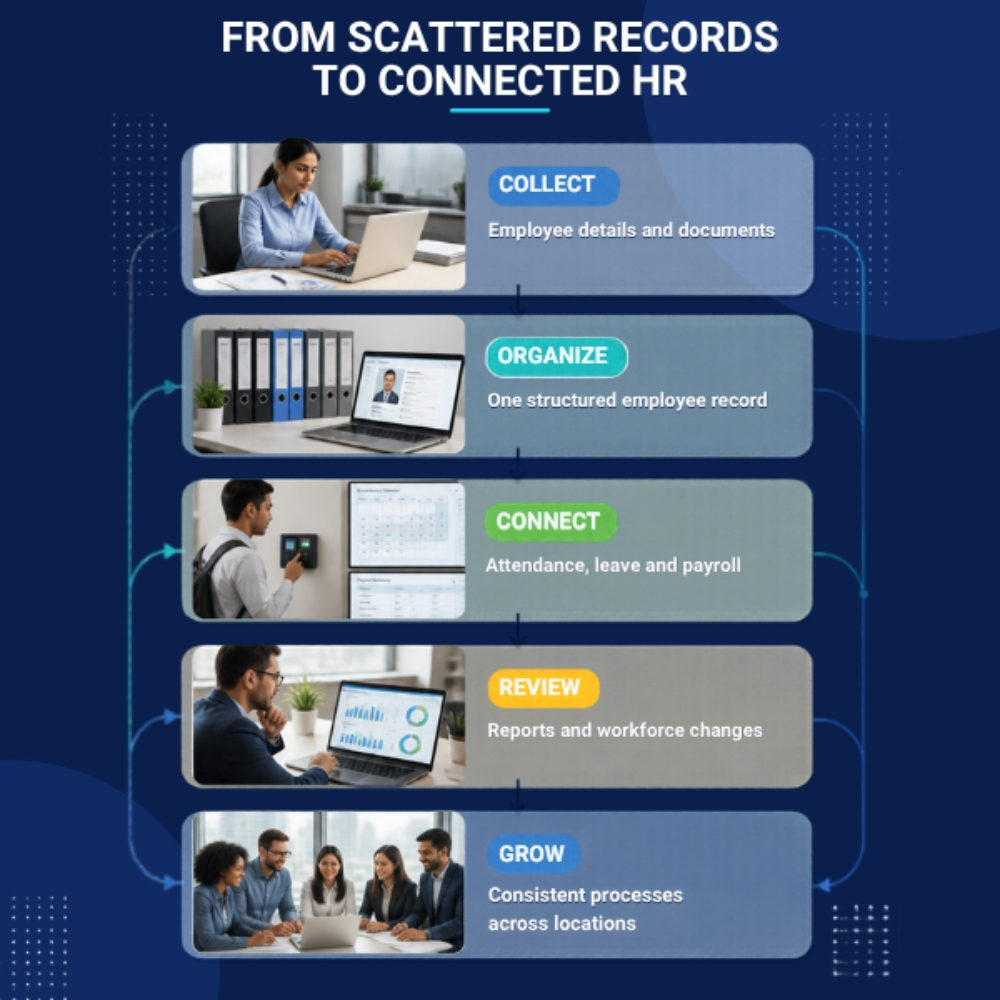
Managing a distributed workforce is not just about knowing how many employees a business has. It is about keeping employee details, documents, attendance information, payroll inputs, and employment changes consistent as the organization grows.
For businesses in the British Virgin Islands and the wider Caribbean, employee management software can provide a more structured way to maintain workforce information and support everyday HR operations. When a company also operates in the Cayman Islands, the same approach can help organize records across locations while keeping local requirements distinct.
HR HUB PRO brings employee information, document management, attendance, payroll, reporting, and mobile access into a connected HR environment. Its Employee Information module is designed to centralize employee records, employment details, and supporting documents, while related modules help businesses manage other HR activities.
With a more connected employee records software approach, HR teams can spend less time searching for information, reduce unnecessary duplication, and give managers a clearer view of the workforce.